


Unscented

Refills

Men's

Sensitive Skin

Pregnancy

Sensitive Scalp

Unscented

Pro-aging

Mascara


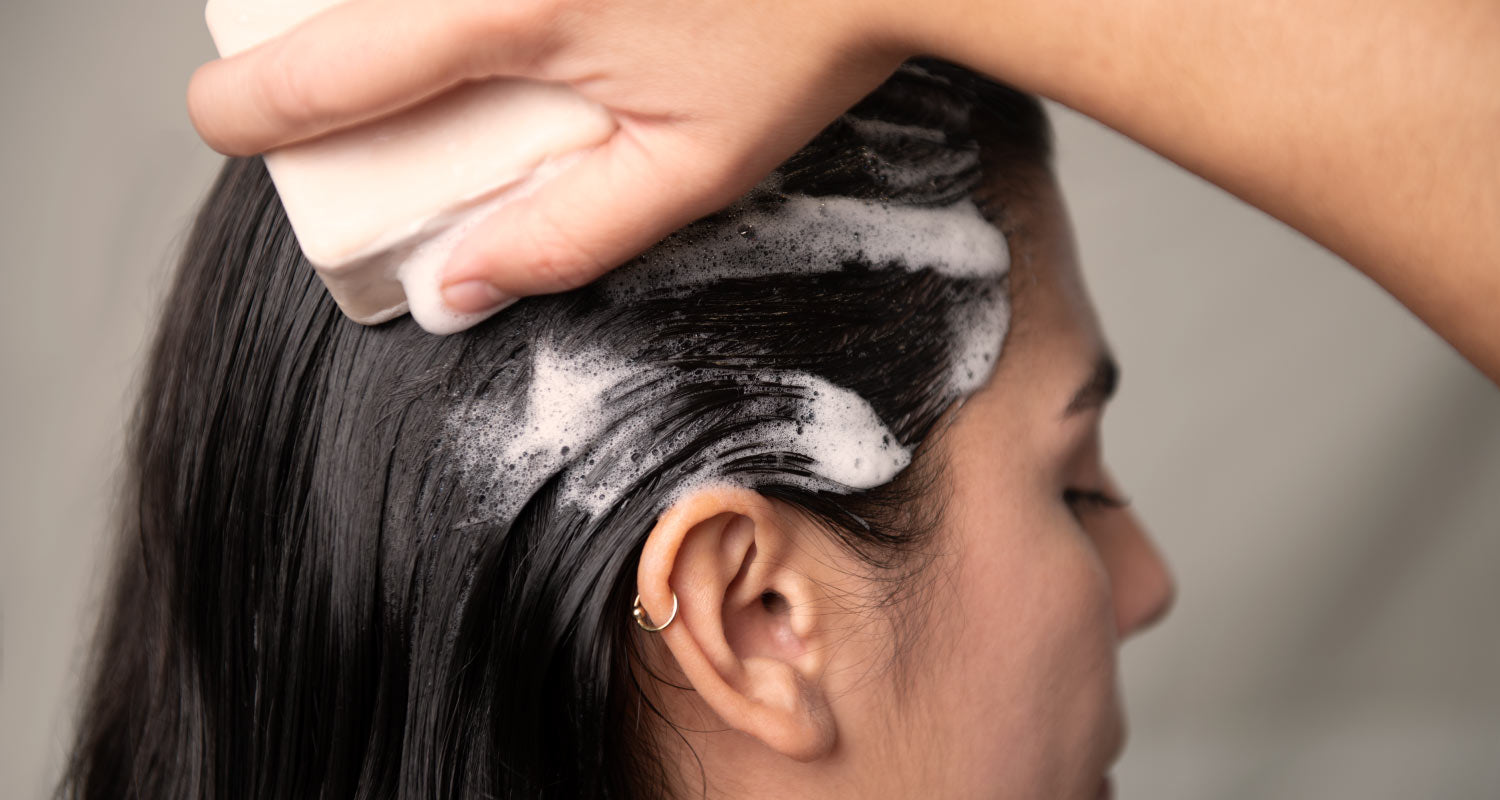
What are the ingredients in a shampoo, and what do they do? Flipping over the bottle to read the label can feel like decoding a secret message. Yet the list of shampoo ingredients says a lot about what’s in the product and the role of each component. Here’s how to read it, followed by 10 common ingredients to look for, with their origin and function.
IN THIS ARTICLE
Ingredients in a shampoo and what they do
A shampoo has two main jobs. It cleans the scalp and hair fibre, then leaves hair easy to style.1 To get there, the formula mostly combines cleansing agents, also called surfactants, conditioning agents and moisturizing agents.2 These three families are where the ingredients below are found. They turn up in plant-based shampoos, but also in many other formulas, and their origin and function vary from one ingredient to the next.
How to read a shampoo label to know what to look for
In Canada, the ingredients of a cosmetic must be listed by their INCI name, the international nomenclature, from highest to lowest concentration. Ingredients that make up 1% or less can appear in any order, and “fragrance” (parfum) comes last.3 The Cosmetic Regulations also require fragrance allergens present above certain thresholds, for example 0.01% in a rinse-off product like shampoo, to be listed individually.4
INCI names follow a universal system, and plants are listed under their Latin names. That’s why the ingredient names in this article appear as they do on the label.
Tip: To choose a gentle shampoo, look out for the cleansers at the top of the list, since their nature largely determines how mild the product is. Mild surfactants are designed to clean while limiting irritation.2
10 ingredients to look for on the label
CLEANSING AGENTS
Decyl glucoside
Decyl glucoside is a non-ionic surfactant. It’s made from glucose derived from plants and a fatty alcohol often sourced from coconut or palm kernel oil. It produces a light lather and is common in gentle shampoos.5 The Cosmetic Ingredient Review (CIR) expert panel considers alkyl glucosides safe in the present practices of use when they’re formulated to be non-irritating.5
Coco glucoside
Coco glucoside belongs to the same family as decyl glucoside. It’s made from glucose and fatty alcohols from coconut. It’s a mild cleanser, appreciated for its lather and good tolerance.5
Lauryl glucoside
Lauryl glucoside is another alkyl glucoside, made from glucose and lauryl alcohol. It contributes to lather and is one of the surfactants used to formulate gentle shampoos.5
Sodium coco-sulfate
Sodium coco-sulfate is an anionic surfactant derived from coconut fatty acids. It’s an effective cleanser that lathers generously. Sulfates clean well, but they can irritate some sensitive scalps, which is why they’re often paired with milder surfactants.2
Sodium cocoyl isethionate
Sodium cocoyl isethionate is made from coconut fatty acids and sodium isethionate, a compound obtained synthetically. This anionic surfactant is known for its mildness and creamy lather.2
Sodium cocoyl glutamate
Sodium cocoyl glutamate results from combining coconut fatty acids with glutamic acid, an amino acid. It belongs to the amino acid-based surfactants, which are appreciated for their mildness.6
MOISTURIZING AND CONDITIONING AGENTS
Glycerin
Glycerin is a humectant, which means it attracts water and helps hold it at the skin’s surface.7 In a shampoo, it helps keep the scalp comfortable.
Shea butter
Shea butter is extracted from the nuts of the shea tree, Butyrospermum parkii. It’s rich in fatty acids and unsaponifiable compounds that give it its softening properties.8
If you’re looking for a shea butter shampoo, look for Butyrospermum parkii butter on the list, preferably near the beginning, since ingredients are ranked from highest to lowest concentration.3
Stearyl citrate
Stearyl citrate is an ester of stearyl alcohol, a fatty alcohol, and citric acid.9 It acts as an emollient, meaning it softens and smooths the skin, and as a skin-conditioning agent.10 The CIR expert panel considers alkyl citrate esters safe in the present practices of use and concentration.11
“Natural” doesn’t mean “risk-free” or “more effective”
A natural-origin ingredient isn’t automatically gentler, safer, or higher-performing than a synthetic one. Most of the ingredients above are also processed. They’re derived from plant-based raw materials but obtained through chemical processes. Some plant extracts, like essential oils, are even among the known contact allergens.14 That’s why fragrance allergens must now be listed individually on the label above certain thresholds.4
The word “natural” on packaging therefore says little about a product’s mildness, safety or effectiveness. The ingredient list, on the other hand, is regulated and shows exactly what the shampoo contains, under what name and in what order of concentration.3 It lets you spot a known allergen, compare two products and check that the ingredients you want are really there.
What do EWG ratings and certifications mean?
One important point to keep in mind: EWG (Environmental Working Group) does not approve ingredients. Its EWG Verified® program certifies products, and its Skin Deep® database assigns ratings. Both tools are often cited, but they don’t mean the same thing:
RATES INGREDIENTS
Skin Deep®
Skin Deep® is a database that assigns ratings to ingredients based on available information. A rating is not an approval. It reflects the level of concern associated with an ingredient based on published data, as well as the amount of data available. It serves as an information guide, not as a regulatory safety assessment or proof that a product is good or bad.15
CERTIFIES PRODUCTS
EWG Verified®
EWG Verified® is a certification program that applies to products, not to the ingredients themselves. The manufacturer submits an application, then EWG reviews the product and its formula against the program’s criteria before approving it. Once certified, the product commits to continuing to meet those criteria to keep its certification.16
Not all ATTITUDE® products are EWG Verified®. To find out whether a product is, look for the logo on the packaging or on its online product page.
Keep exploring
Discover the ATTITUDE® shampoo collection
References
[1] Draelos ZD. Essentials of hair care often neglected: hair cleansing. Int J Trichology. 2010;2(1):24-9. doi:10.4103/0974-7753.66909
[2] Trüeb RM. Shampoos: ingredients, efficacy and adverse effects. J Dtsch Dermatol Ges. 2007;5(5):356-65. doi:10.1111/j.1610-0387.2007.06259.x
[3] Government of Canada. Cosmetic Regulations, C.R.C., c. 869 [Internet]. Ottawa: Justice Canada; [cited 2026 Oct 26]. Available from: https://laws-lois.justice.gc.ca/eng/regulations/C.R.C.,_c._869/
[4] Government of Canada. Regulations Amending Certain Regulations Concerning the Disclosure of Cosmetic Ingredients, SOR/2024-63. Can Gaz II. 2024 Apr 24;158(9) [Internet]. [cited 2026 Oct 26]. Available from: https://gazette.gc.ca/rp-pr/p2/2024/2024-04-24/html/sor-dors63-eng.html
[5] Fiume MM, Heldreth B, Bergfeld WF, Belsito DV, Hill RA, Klaassen CD, et al. Safety assessment of alkyl glucosides as used in cosmetics. Int J Toxicol. 2013;32(5 Suppl):22S-48S.
[6] Tripathy DB, Mishra A, Clark J, Farmer T. Synthesis, chemistry, physicochemical properties and industrial applications of amino acid surfactants: a review. C R Chim. 2018;21(2):112-30. doi:10.1016/j.crci.2017.11.005
[7] Fluhr JW, Darlenski R, Surber C. Glycerol and the skin: holistic approach to its origin and functions. Br J Dermatol. 2008;159(1):23-34. doi:10.1111/j.1365-2133.2008.08643.x
[8] Honfo FG, Akissoe N, Linnemann AR, Soumanou M, Van Boekel MAJS. Nutritional composition of shea products and chemical properties of shea butter: a review. Crit Rev Food Sci Nutr. 2014;54(5):673-86. doi:10.1080/10408398.2011.604142
[9] European Commission. CosIng: cosmetic ingredients database, entry Stearyl citrate (no. 38325) [Internet]. Brussels: European Commission; [cited 2026 Oct 27]. Available from: https://ec.europa.eu/growth/tools-databases/cosing/details/38325
[10] COSMILE Europe. Stearyl citrate [Internet]. Brussels: Cosmetics Europe; [cited 2026 Oct 27]. Available from: https://cosmileeurope.eu/inci/detail/15547/stearyl-citrate/
[11] Fiume MM, Heldreth B, Bergfeld WF, Belsito DV, Hill RA, Klaassen CD, et al. Safety assessment of citric acid, inorganic citrate salts, and alkyl citrate esters as used in cosmetics. Int J Toxicol. 2014;33(2 Suppl):16S-46S. doi:10.1177/1091581814526891
[12] INCI Beauty. Glyceryl oleate [Internet]. [cited 2026 Oct 27]. Available from: https://incibeauty.com/en/ingredients/6439-glyceryl-oleate
[13] Environmental Working Group. EWG’s Skin Deep®: Glyceryl oleate [Internet]. Washington (DC): EWG; [cited 2026 Oct 27]. Available from: https://www.ewg.org/skindeep/ingredients/702650-GLYCERYL_OLEATE/
[14] de Groot AC, Schmidt E. Essential oils, part IV: contact allergy. Dermatitis. 2016;27(4):170-5.
[15] Environmental Working Group. EWG’s Skin Deep® Cosmetics Database [Internet]. Washington (DC): EWG; [cited 2026 Oct 26]. Available from: https://www.ewg.org/skindeep/
[16] Environmental Working Group. EWG Verified® [Internet]. Washington (DC): EWG; [cited 2026 Oct 26]. Available from: https://www.ewg.org/ewgverified/